
Europe
While the European Union and the Euro zone provide shared frameworks and economic structures across much of Europe, cultural and market distinctions remain significant and must be carefully considered by proactive exporters. In 2026 and beyond, these distinctions are evident, as economic trajectories and sentiment vary greatly among EU member states. Countries like Poland and Spain are experiencing robust growth, while others, such as Germany and Italy, remain sluggish. EU nations continue to contend with differing inflationary pressures, political tensions stemming from the war in Ukraine, and shifting perspectives on globalization, all of which shape ongoing trade discussions. Looking ahead, EU economies will remain strong consumers of U.S. goods. In 2026, U.S. businesses must navigate increased complexities, including the threat of tariffs, customs procedures, regulatory checks, rules of origin, and stringent local content requirements. Wisconsin companies should carefully evaluate these changes to refine their distribution strategies and maintain competitiveness in European markets.
.

United Kingdom
Overview
The UK continues to show strong consumer spending along with increased investment in technology and infrastructure. In 2025, the UK economy is expected to grow modestly (with forecasts clustering around about 1.2-1.5 % GDP growth), reflecting resilient activity despite global headwinds. This modest expansion is underpinned by continued consumer spending, public and private investment, and the UK’s policy focus on innovation and green initiatives that support productivity and new market development.
As not only a large and sophisticated market but one that is recognized for its ease of doing business, the UK is an attractive market for Wisconsin exporters. U.S. companies already have a strong position in the market due to longstanding relationships, close cultural links, a shared language, and strong trade links across multiple sectors; in addition, the UK’s departure from the EU continues to encourage UK companies to reevaluate their sourcing strategies. Notwithstanding historic ties, the UK can be a highly competitive and price-sensitive market.
Traditionally, Britain’s strong manufacturing base has attracted Wisconsin industrial machinery suppliers and advanced manufacturing companies, especially those serving the aerospace, defense, and security sectors. Today, British demand is increasingly expanding to include Wisconsin expertise in life sciences, water technology, clean energy solutions, and professional services, reflecting the UK’s ongoing focus on innovation, digital transformation, and sustainability.
Market Statistics
Population: 69 million (12x the size of Wisconsin)
Area: 200,000 km² (1.5x the size of Wisconsin)
GDP: $3.7 trillion
2025 Wisconsin exports: $872 million
Wisconsin export rank: 6
2025 Wisconsin imports: $413 million
Key industries: Aerospace and defense, agriculture, energy, design and construction, medical technology, information and communication technology, safety and security, financial technology, education and training
Top Export Categories
Benelux
Overview
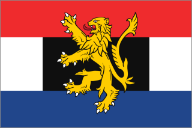
Many U.S. companies employ a regional approach when doing business in the three Benelux countries. The location and logistics infrastructure in the Netherlands and Belgium make them ideal locations for broader European distribution facilities. Luxembourg has long been a world center for banking, finance, and insurance. The Benelux countries all have favorable tax climates, well-educated and English-speaking workforces, and favorable Ease of Doing Business rankings from the World Bank.
The Benelux region (comprising Belgium, the Netherlands, and Luxembourg) is a dynamic economic hub in Western Europe, with a combined GDP exceeding $1.2 trillion and one of the highest standards of living in the world. The Netherlands and Belgium serve as key logistics gateways to Europe, supported by world-class ports (such as Rotterdam and Antwerp) and advanced transportation networks, while Luxembourg excels in financial services and innovation-led industries. Although the combined Benelux market ranks outside the very top tier of U.S. export destinations overall, Wisconsin companies have gained traction in sectors such as industrial machinery, advanced manufacturing, life sciences, water and environmental technologies, and software services, reflecting strong regional demand for high-quality, innovative solutions.
Both the Netherlands and Belgium are in the top 10 destinations for Wisconsin exports. The Benelux countries all have favorable tax climates, well-educated and English-speaking workforces, and favorable Ease of Doing Business Rankings from the World Bank. (Out of the 185 countries reviewed, the Netherlands ranks 42, Belgium ranks 46, and Luxembourg comes in at 72.) Wisconsin companies active in supplying the chemicals and high-tech sectors are especially of interest in the Benelux market, as are those supplying agricultural technology and manufacturing components.
Market Statistics
Population: 31 million (5x the size of Wisconsin)
Area: 70,000 km² (Less than half the size of Wisconsin)
GDP: $2.0 trillion
2025 Wisconsin exports: $1.8 billion
Wisconsin export rank: 3 – combined; 7 – Belgium; 3 – Netherlands; 113 – Luxembourg
2025 Wisconsin imports: $1.0 billion
Key industries: Agriculture, aircraft and parts, software, cybersecurity, defense technology, information and communications technology services, medical devices, energy and renewable energy, safety and security, travel and tourism
Top Export Categories

Germany
Overview
Germany is home to both reliable customers of Wisconsin exporters and some of their toughest competition. With a population of 83 million, Germany is the largest consumer market in the EU. Economically, Germany is Europe’s powerhouse, by itself constituting roughly a quarter of the EU economy. This makes it the largest economy on the continent and the third-largest worldwide. For total trade, Germany is surpassed only by China and the U.S. In 2025, Germany is navigating a complex economic environment. The German economy is continuing its shift to digitization, renewable energy, and green technology. Although headlines may be mixed with uncertainty from energy and geopolitics, Germany continues to be a strong export partner.
As one of the strongest economies of the world and the largest national economy in Europe, Germany continues to be the main European trading partner of the U.S. Despite recent economic challenges, Germany’s economy has continued to demonstrate resilience in global trade. A high number of subject matter experts (many so-called “hidden champions” with status as world market leaders in their respective niche segments) shapes the German market, which is especially known for its high degree of innovation. The manufacturing industry represents 8.5% of Europe’s manufacturing companies and generates 25% of the EU’s manufacturing turnover. Innovative products account for an estimated 30% of German manufacturing sales. A focus on advanced manufacturing , green technology, and digitization has helped sustain Germany’s competitive edge in the global market. Germany continues to look for growth opportunities in life sciences, manufacturing, and sustainable technology.
Like Wisconsin companies, German companies value quality, productivity, and innovation. Despite the overall challenges in the European market (including inflation and slowing economic growth), export prospects remain strong for Wisconsin companies to further increase their sales to German customers.
Market Statistics
Population: 84 million (14x the size of Wisconsin)
Area: 400,000 million km² (2x the size of Wisconsin)
GDP: $4.7 trillion
2025 Wisconsin exports: $942 million
Wisconsin export rank: 5
2025 Wisconsin imports: $2.6 billion
Key industries: Agriculture, aerospace/defense/security, advanced manufacturing, health care and medical technology, information and communications technology, smart cities, education and training
Top Export Categories

Italy
Overview
The Italian economy is the eighth-largest in the world and the third-largest in the European Union, with a GDP of approximately $2.1 trillion ($36,000 per capita) in 2024, according to trade.gov. While Italy ranks as the 18th-largest market for U.S. export goods, Wisconsin has experienced steady growth in exports to the country. Opportunities for U.S. firms are strongest in sectors where companies offer technological innovation, advanced manufacturing capabilities, strong design expertise, or competitive pricing, particularly as Italy continues to modernize its industrial base.
As the third-largest market in the Euro zone and the eighth-largest globally, Italy is much more than a tourist destination. The Italian economy has many links to Wisconsin, particularly in manufacturing, agriculture, paper processing, and life sciences. Italian consumers are increasingly focused on quality and sustainability of products.
Market Statistics
Population: 59 million (10x the size of Wisconsin)
Area: 300,000 million km² (2x the size of Wisconsin)
GDP: $2.4 trillion
2025 Wisconsin exports: $218 million
Wisconsin export rank: 20
2025 Wisconsin imports: $1.0 billion
Key industries: Food and beverage, manufacturing equipment, medical devices, information technology, education and training services
Top Export Categories

France
Overview
With a highly educated population, first-rate universities, and a skilled workforce, France is one of the largest countries in Europe and a leader among European nations. The French government has partially or fully privatized many large companies, including Air France, France Telecom, Renault, and Thales. However, the government maintains a strong presence in some sectors, particularly the power, public transportation, and defense industries. In 2025, France’s economic growth remains modest, with GDP expected to expand by around 0.7-0.8%, reflecting a slow but steady recovery driven by key sectors such as tourism, aeronautics, agriculture, and real estate, even as consumer spending and business investment stay subdued. Tourism continues to be a strong engine for the economy: in 2024, France welcomed more than 100 million visitors.
France is a large market—the sixth-largest economy in the world and the second-largest population in the European Union. It is also the largest country geographically in the EU—with nearly twice the land mass of the United Kingdom. France maintains the advantage of having shared borders with the greatest number of other European countries (Belgium, Germany, Luxembourg, Switzerland, Spain, and Monaco) and shares a common language with several, leading to a vast amount of cross-border trade. With an enviable logistics network, a sophisticated consumer base, and the second-strongest industrial base in Europe, France has long attracted U.S. exporters with innovative technologies and service offerings.
France imports nearly $500 million in Wisconsin goods every year. As the powerhouse for EU agriculture, France is a natural primary export target market for Wisconsin companies. But France also hosts world leaders that act on a global stage, from EDF (the world’s second-largest in electricity and nuclear power generation) to LVMH (a global leader in luxury goods). French businesses boast particular strength in aeronautics, defense, retail, consumer and luxury goods, building materials, and construction. Once trading with these French leaders in their domestic market, Wisconsin companies can often benefit from these companies’ global reach to enter new markets.
Market Statistics
Population: 69 million (12x the size of Wisconsin)
Area: 600,000 km² (4x the size of Wisconsin)
GDP: $3.2 trillion
2025 Wisconsin exports: $384 million
Wisconsin export rank: 16
2025 Wisconsin imports: $900 million
Key industries: Computer services and software, civil aircraft and parts, additive manufacturing, life sciences, medical devices, e-commerce, travel and tourism, educational services, agriculture
