
Tackling the ups and downs of rural prosperity
Wisconsin's rural communities face challenges such as housing shortages, aging populations, and, for some, the loss of schools and healthcare facilities.
But through collaboration, cooperation, and community involvement, rural regions are attracting new residents and achieving economic development gains.
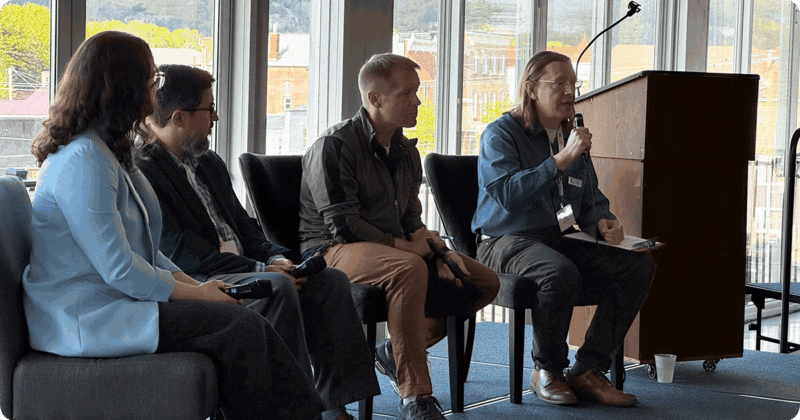
Those successes were among the highlights of the Wisconsin Rural Partners Summit held April 29-30 in Prairie du Chien. The conference featured a series of panel discussions focused on life outside the state's bustling urban centers.
Navigating challenges together
Rural trends are changing, and communities within those regions should consider working across municipal boundaries and taking advantage of a growing range of opportunities, speakers said in a session about the state of rural Wisconsin.
"Rural has become the new buzzword," said Melissa Hunt, president and CEO of the Wisconsin Economic Development Association, a nonprofit, nonpartisan research and education foundation. "That makes the work we do even more important right now."
Beth Haskovec, director of WEDC's Office of Rural Prosperity (ORP), said both the state and federal governments currently view rural communities as a priority. As a result, the organization is encouraging rural municipalities to work together to leverage programs that offer grants, loans, or matching funds for economic development or to approach foundations when government aid is not an option.
Haskovec said housing and childcare are among the biggest concerns raised by rural communities. "Economic development doesn't just mean business and jobs anymore—it's much broader than that," she said.
The aging population and declining birth rate in the U.S. are prompting changes in healthcare, housing, and care services, added Hunt. "By 2030, we'll have the largest number of people over the age of 65 that we've ever had in this country's history," she said.
Aging infrastructure is another challenge, said Andrew Iverson, the U.S. Department of Agriculture's state director for rural development.
In addition to wastewater treatment facilities that need upgrades every 20 to 30 years, a list of clean drinking water projects proposed across Wisconsin would total more than $360 million.
For rural hospitals, funding is a major challenge, said Marie Barry, director of community economic and workforce development for the Rural Wisconsin Health Cooperative. "Rural hospitals depend heavily on Medicare and Medicaid," she said, and government reimbursements cover only a fraction of the costs. Hospital closings have a huge impact on rural communities, forcing residents to travel farther for healthcare, and those that stay open often struggle to find employees.
But despite the difficulties, "small rural healthcare facilities are not inferior healthcare. We are so, so lucky to have really high-quality rural healthcare," Barry said.
Haskovec said her office is working to build partnerships across rural regions. "We want to make sure you're connected with other folks. We don't ever want you to feel alone out there."
Rural life is the good life
One of the significant findings of a recent study is that "most rural areas have a really high quality of life," University of Wisconsin Extension Land Use and Community Development Specialist Todd Johnson told a session about grassroots community building.
The study, conducted by UW Extension Associate Professor of Agriculture and Applied Economics Tessa Conroy, found that a fourth wave of economic development is underway around the country: companies are choosing to locate in communities with excellent quality of life. "So, instead of people following the jobs, the jobs are now starting to follow the people," Johnson said.
To define quality of life, the study looked at indicators such as access to housing, availability of medical and mental health services, public participation, landscape, and arts and culture.
Four factors were used to define prosperity—jobs, income, education, and housing—and rural communities were compared with urban areas. "One of the things we're finding is in our rural areas we have incredible prosperity," Johnson said.
One example of small-town success is Pittsville, a Wood County city of 813 residents in what's been described as the geographic center of Wisconsin. In Pittsville—a Thrive Rural Wisconsin community—two subdivisions had been authorized and equipped with roads and infrastructure, but only a handful of homes were built over a 20-year period, Alderman Michael Hobbs said.
Then, a few years ago, the city approved a program offering $75,000 short-term loans to help builders with operational costs, thanks to funding from a partnership with Wood County. The lots are now filled with homes and families moving to Pittsville from as far as California and Washington state and opening businesses in the community, Hobbs said. "In the last few years, we've had about a 10% increase in housing and probably equivalent population growth," he said.
Anne Katz, executive director of Create Wisconsin, an independent, statewide, cultural development organization, said she sees significant creative energy in the state's rural communities—not only in the arts but in all aspects of life, including business, education, and civic issues.
"People around the state are working creatively on real issues that affect their lives and their communities. Entrepreneurship and creativity go hand in hand, especially in our state's smaller towns and rural areas," Katz said.
Immigrants boost rural communities
The addition of immigrants can be a factor that contributes to the health of rural economies, speakers told the conference.
"Our economy depends on people," said Nancy Hernandez, president of the Hispanic Collaborative. The Milwaukee-based nonprofit has created a data-driven model called the Hispanic Well-Being Index, tracking 40 variables—not just in Milwaukee but in the 50 largest metro areas across the U.S.—to monitor and improve the income, financial stability, employment, and health of the Latino population.
While U.S. Census Bureau figures showed Wisconsin's total population has grown slowly since 2010, the number of residents ages 25-54 dropped by 6% between 2010 and 2023, Hernandez said. All but two counties—Dane and Eau Claire—lost residents within that prime working age group.
The Hispanic Collaborative took a closer look at the breakdown of the population losses and gains from 2010 through 2024 in each Wisconsin county, in terms of white, Hispanic, Asian, and new immigrants. In most cases, the number of white residents fell, but almost every county gained Hispanic, Asian, and foreign-born residents.
Some examples: The Asian population grew more than 700% in Buffalo and Pepin counties, while the Hispanic population rose 415% in Washburn County and 118% in Grant County.
Although these high percentages are calculated based on a small initial population—and thus may not represent large absolute numbers of residents gained—this growth "still matters," Hernandez said. "It is about keeping schools open. It is about filling those local jobs and supporting and growing Main Street businesses."
Francis Henn, of the Southwest Wisconsin Regional Planning Commission, emphasized the importance of integrating newcomers into rural communities by ensuring they have interpreters and community support to find the information they need, including how to access legal and financial support, education, and healthcare.
Hold cultural celebrations and small business clinics on a regional basis, said Henn, who works with five counties. "Build community. Build trust. Make friends."
Building rural wealth
Jefferson County is Wisconsin's first rural county to house a branch of the Financial Empowerment Center (FEC), a nonprofit that provides free, one-on-one, personalized financial counseling to area residents.
The nationwide program began in New York in 2008 and has served more than 210,000 clients and reduced their debt by a combined $370 million.
The Jefferson County offices—in Fort Atkinson, Jefferson, Lake Mills, and Watertown—opened in September 2025 with two full-time financial counselors and more than 60 referral partners, including nonprofits, schools, employers, and county programs. In eight months, they have served more than 60 clients, reducing non-mortgage debt by a combined $350,000 and increasing savings by nearly $85,000, said FEC local government manager Heather Nunez.
"I am also a client of the program," Nunez said. "My husband lost his job, and the program helped us work through that. Having one more person in our corner when we needed it was wonderful."
Data-driven development
For many rural communities, development can be a sticky issue. For example, if more homes are built, can the schools accommodate additional students? Is existing infrastructure adequate? And what effect will a development have on levy limits—the state-imposed cap on how much a local government body can raise its property tax levy for operations?
Several Jefferson County communities were grappling with those questions, County Administrator Michael Luckey said. So, they turned to the Wisconsin Policy Forum to produce quantitative data that might help find the appropriate solutions.
The nonpartisan, independent policy research organization considered factors such as population growth, new construction, and the potential impact on schools and county and municipal services, as well as (on the positive side) the increased tax revenue and fees a new development can provide, Wisconsin Policy Forum President Jason Stein said.
In the city of Jefferson, for example, residents voted in 2023 in favor of a referendum to raise the property tax levy by $500,000 to hire more emergency medical services staff. Development in Jefferson had slowed in recent years. However, the Wisconsin Policy Forum found that if the city had achieved a 2% annual rise in development since 2017, it would have generated nearly as much money as the referendum brought.
"We don't tell communities what sort of values they ought to have," Stein said. "But if someone says this [project] will hurt our schools, we look at the data."
Wisconsin Rural Partners serves as a hub for organizations, government agencies, and citizens working to boost life in rural Wisconsin and to build leadership in rural regions. Nearly 80 people registered to attend the summit.
Related Posts