
Generac, the Waukesha-based company best known for its home electric generators, is stepping into the burgeoning data center market to ensure critical power stability as the use of artificial intelligence grows.
Brad Meisner, Generac’s director of product management, framed Generac’s mission as “Powering a Smarter World,” built on three pillars: improving energy resilience and independence, optimizing energy efficiency, and building and protecting critical infrastructure through mobile power.
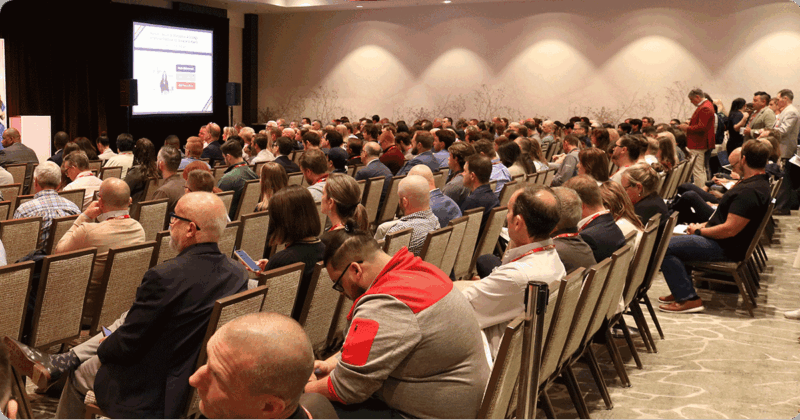
At Milwaukee’s Summerfest Tech in late June, Meisner connected the mission to megatrends reshaping the electric grid: AI-driven data center growth, lower power quality from stressed grids, and sharply rising power prices as new generation and transmission infrastructure is built to meet rising power demand.
Promoting a stable supply
Data centers require steady, reliable sources of electric power. To meet that demand, Generac has aggressively entered the large-scale digital infrastructure market, launching megawatt-class standby generators and building an ecosystem that includes battery energy storage systems, microgrid controllers, switchgear, and remote management software.

Brad Meissner, Director of Product Management, Generac Power Systems
“The digital generator set is an engine, an alternator, a cooling package, a control system—but really the thing that the data centers care most about is how that full package sits on site,” Meisner said.
He said the company’s ecosystem serves as a “shock absorber” between data centers and the grid. The demands of machine learning can swing from 30% to 100% within milliseconds, he said—and that’s when backup generation from Generac eases the challenges of supply and demand.
“It’s something that creates a lot of havoc back into the grid, a lot of grid operators have said you cannot connect your sites unless you have some sort of a buffer between your [server and computer gear] racks and what we’re seeing on the grid,” Meisner said.
He added: “A grid operator always wants to be balancing supply and demand. …So as much as they’re producing, ratepayers have to be consuming. That imbalance creates instability on the grid. Instability of the grid relates to rolling blackouts. … It leads to other issues that are extremely impactful to businesses and to homeowners.”
Generac’s work with microgrids—localized, self-contained power networks—is also key to maintaining power stability.
“If there’s no sun, then you can’t charge with solar, charge the battery with the grid, or start and run the generator set, because the grid isn’t stable,” Meisner said, adding that AI is also helping Generac write the code and embed AI tools into microgrid controllers.
Primed for growth in Wisconsin
Founded 65 years ago by Robert D. Kern in a garage in Wales, Wisconsin, Generac today employs 10,000 people and operates in 150 countries around the globe. Its dominant product has been home generators, but that’s changing as data center development surges, Meisner said.
The company has made strategic investments to scale its commercial and industrial business and strengthen its global capabilities. Recent initiatives include a collaboration with EPC Power to deploy fully integrated energy solutions for data center applications worldwide and the acquisition of Enercon, adding expertise in generator enclosures and switchgear for critical applications.
Those efforts are supported by the ongoing expansion of manufacturing and operational functions at facilities in Beaver Dam, Oshkosh, and Sussex in Wisconsin and in Belvidere, Illinois. Meisner said the company plans to double its industrial business from $1.7 billion to $3.4 billion by 2028, surpassing its $2.5 billion residential segment.
“It’s very quickly here that we will be a larger industrial business than we are a residential business, which is awesome,” Meisner said. “For the longest time, the industrial business was kind of the small stepbrother to the residential business. The home standby business, the home standby brand, all of that really grew Generac, but now it’s flipping. And we’re seeing a lot more interest in our industrial brand.”
Related Posts