
By Joe Lawniczak
WEDC Downtown Design Specialist
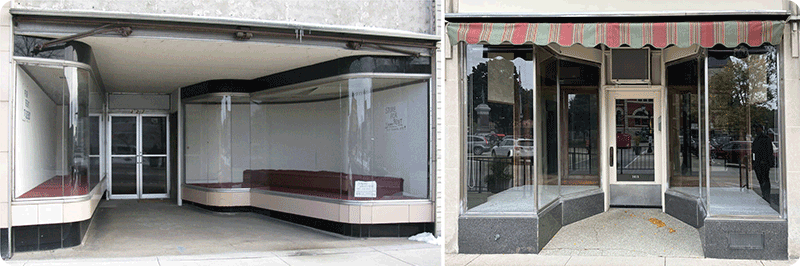
Vacant storefronts should be thought of as a blank slate for a new business.
Vacant storefronts exist in every community. Most often it’s not a sign of a struggling district or a poor economy. Businesses come and go for various reasons. Perhaps a business has grown and moved to a larger space. Maybe another has refined its offerings and downsized to a smaller space. Some business owners face unexpected personal (or personnel) issues that force them to close. But having some vacancies in a district is actually a good thing, so when a suitable business is looking for space, there are options available.
Yes, there are local, state, or even global economic issues that can affect businesses and vacancies, but those are generally temporary. It’s how our businesses, property owners, and communities react to these ebbs and flows that will determine how well they’re able to get through them. And in most cases, such success depends on the message and attitude they’re portraying.
If a community dwells on one key property that has been vacant for years, it may lose sight of the fact that 10 other businesses may have opened elsewhere downtown. We need to always turn negatives into positives, when possible, such as reminding people that these spaces aren’t empty, they’re full of opportunity.
But a big step in that process is getting owners of vacant storefronts to buy into that philosophy. Main Street communities can assist them in many ways, with ideas, hands-on assistance, financial incentives, mentorships, and even peer pressure when needed. This visual article will illustrate some of these strategies.
Curating the message
When a storefront becomes vacant, or has been for some time, the least effective approach is allowing it to look vacant and deteriorated. Many property owners will say they can’t afford to make improvements to a building until they find a good tenant. But the chances of them finding a good tenant are very slim unless they make some basic improvements.
At the very least, they should repair highly visible deteriorated elements, replace cracked glass, clean up the entryway, and utilize more than just hand-painted “for rent” signs. And when possible, encourage them to make long-term improvements, such as reopening boarded-up or downsized windows, and getting the interior to a clean, basic “white box” appearance. These types of improvements are much easier to do when the building is vacant anyway, and they will make a space much more appealing to potential tenants.
Communities can help with financial incentives (when available), design advice for the façade or display windows, and marketing the space online.
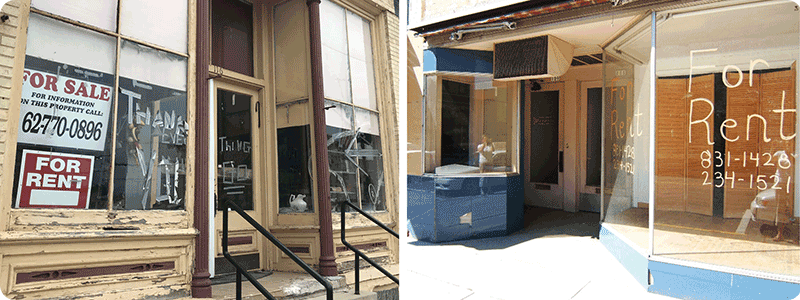
Vacant storefronts that look like these will likely not attract a good tenant, and only having a “for rent” sign in a window (and not online) means the space is invisible to many potential tenants.
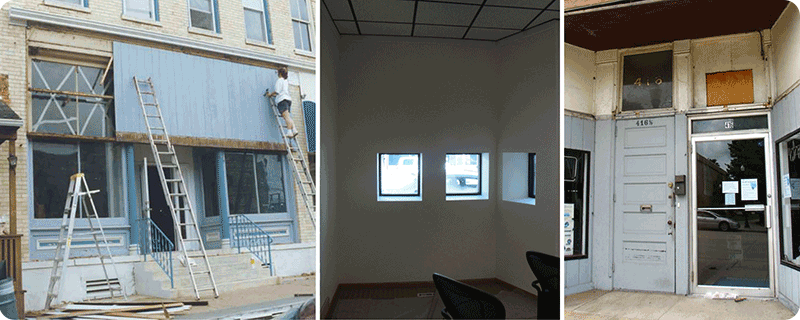
Concealed transoms, downsized storefront windows, and unattractive entry doors will turn off most potential tenants. Addressing these issues is much easier to do when the building is vacant. Communities can customize their incentives and resources toward these types of improvements.
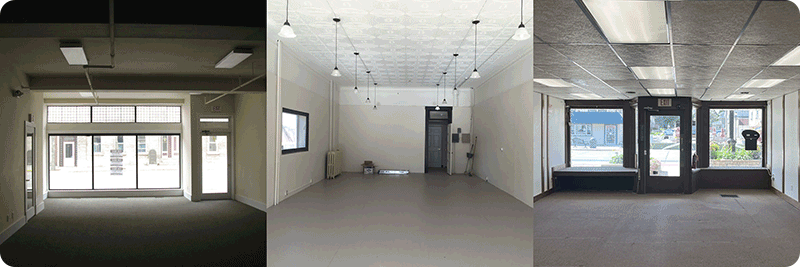
Generic “white box” improvements can allow potential tenants to visualize their businesses in a space much easier.
In cases where a storefront has been vacant for years, communities must resist the urge to allow incompatible uses just to get them filled. Main Street districts rely on a continuous series of commercial storefronts in order to thrive. Having that continuity disrupted by a noncommercial use such as storage or residential can be detrimental.
Allowing a property owner to use a prominent storefront space for storage can also cause considerable damage to the building itself, due to the weight of the storage. Storage areas are typically not occupied every day, so when issues arise, such as vermin, vandalism, broken pipes, or roof leaks, no one is there to monitor it.
Converting a ground-floor storefront into residential is often considered an irreversible change, since it is difficult and expensive to undo in the future, and thus, rarely ever is. This is not to say that communities shouldn’t allow live-work units in these spaces, where the front half is open to the public, and the back half is residential. It may also be appropriate to install an accessible residential unit in the back of the building if the property is suitable for that. But the main storefront area should never be residential.
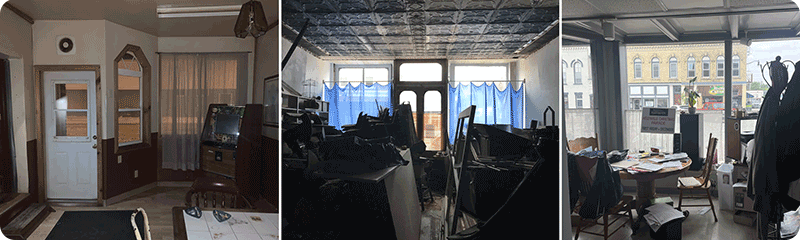
Allowing ground-floor residential, storage, or cluttered office space in a vacant storefront can be detrimental to the building and the district. Communities can enact ordinances to prohibit such uses at Main Street storefronts.
Focusing on the storefront
While façade and building improvements are very important to potential tenants, they can also be expensive. Thankfully there are additional ways to make a storefront attractive to potential tenants for very little cost, such as temporary storefront displays. Often all it takes is imagination and creativity. If a property owner isn’t endowed with these traits, perhaps there are a few neighboring business owners who are and can provide assistance.
While many eye-catching and effective window displays are simple and inexpensive, it’s important that they are not cheaply done. Avoiding clutter or a tacky homemade feel, even on do-it-yourself displays, is vital.
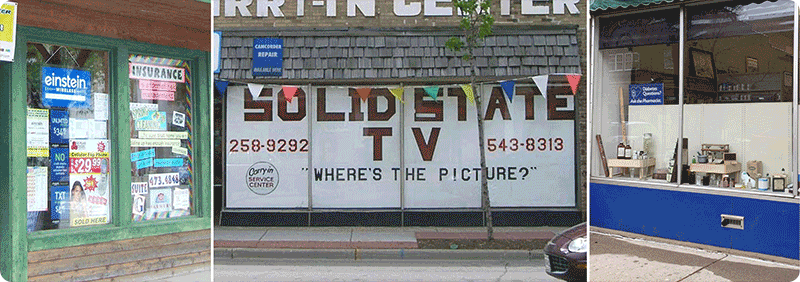
Cheap or cluttered window displays can be less appealing than a blank window.
The main goals in creating a temporary window display in a vacant storefront are to turn the negative of the vacancy into a positive, to make the window look less vacant, and to allow potential tenants to see how it could be used. The same is true for storefronts that have a new business coming soon. In these cases, temporary window displays can build excitement for what’s coming next. In both cases, colorful signage or vinyl clings can be very effective, as the images below illustrate.
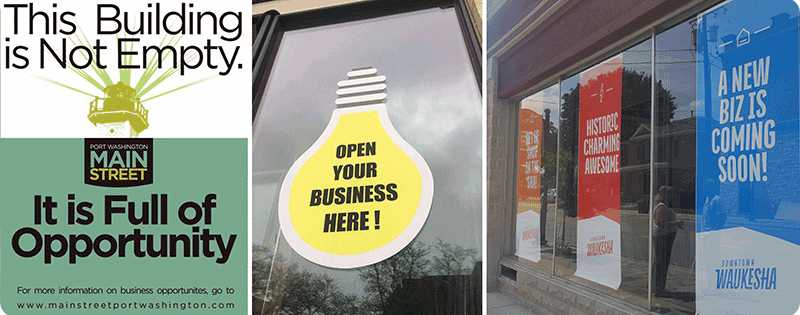
Colorful signage can lure potential tenants or build excitement for what’s coming next.
Temporary displays are a simple and inexpensive way to make a vacant storefront look active, fun, colorful, and even quirky. The images below show various examples, using artwork, community information, local history, holidays, oversized items, antique or vintage items, and even random slogans.
All window displays should be changed regularly to keep them fresh–perhaps every month, or at each holiday or major event. If artwork is used, consider art from local artists, and rotate works at various windows throughout downtown. If there is a major downtown streetscape project or development coming soon, vacant windows can be used to show the plans and renderings. Or displays can utilize features that have nothing to do with downtown but are just fun.
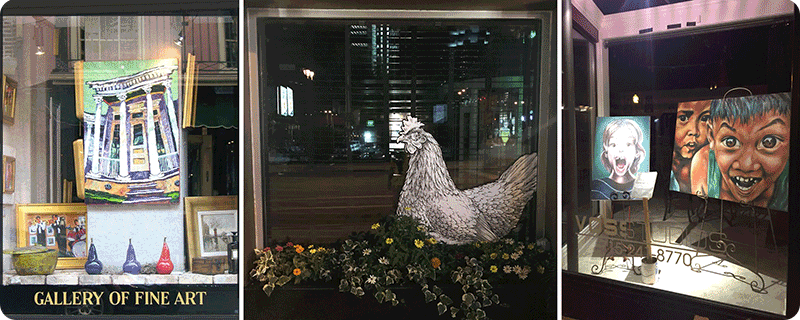
Artwork
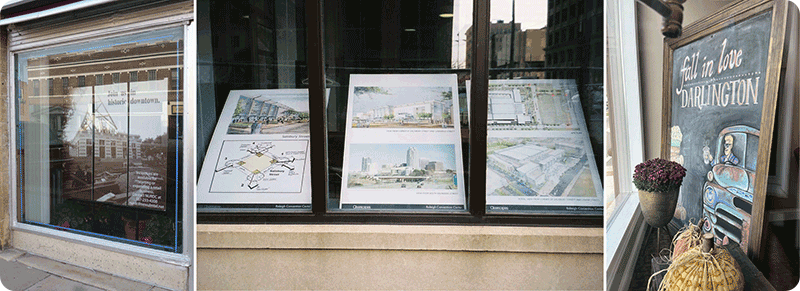
Community information
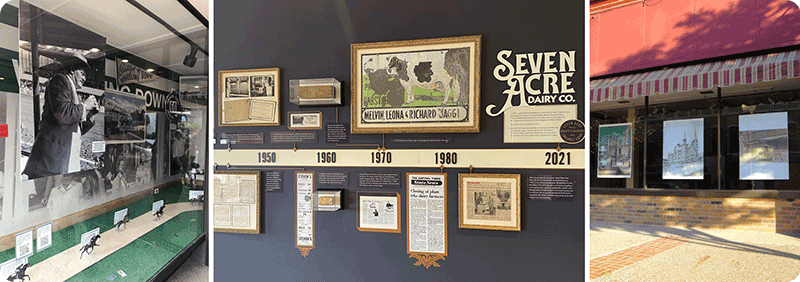
Local history
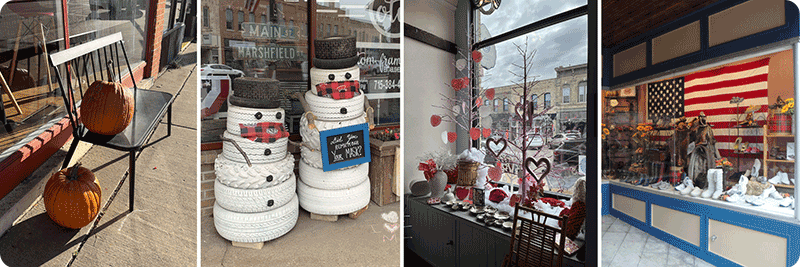
Holidays (inside and out)
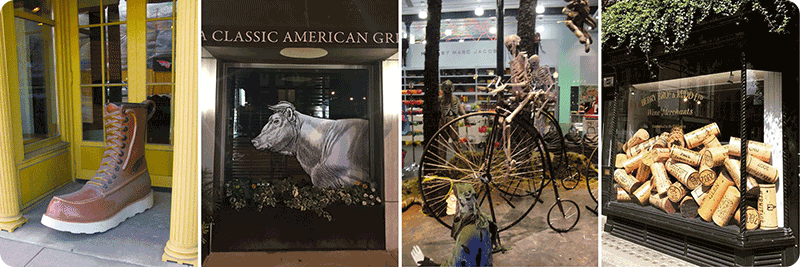
Oversized items
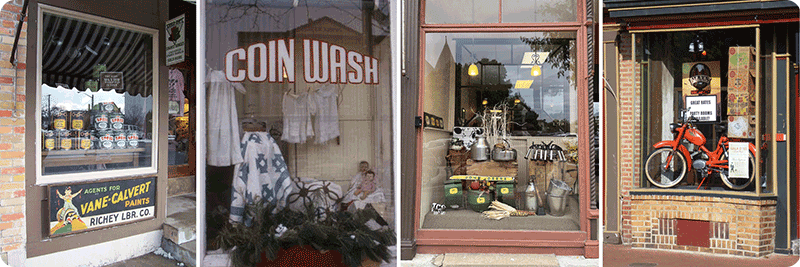
Antique or vintage items
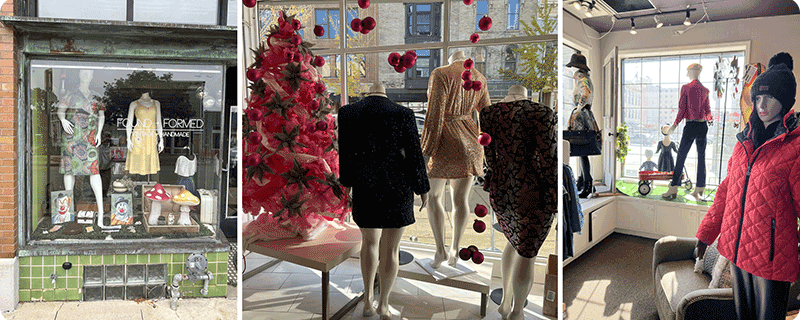
Mannequins (even when not selling clothing)
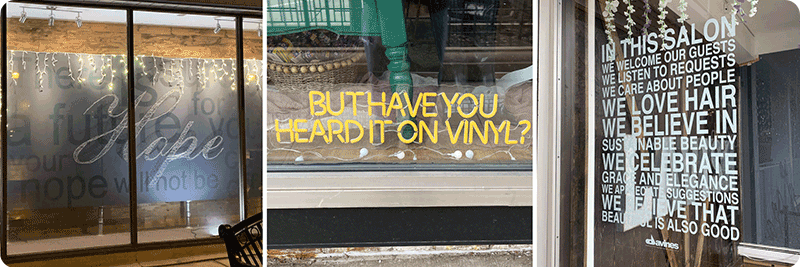
Slogans, fun quotes
Temporary window displays in vacant storefronts should follow the same design principles as business merchandising: Keep it simple, use colors (even bright ones), balance height and depth, display similar items in groups of three, embrace quirkiness, use movement when possible, and always be strategic with lighting. The images below show examples of each.
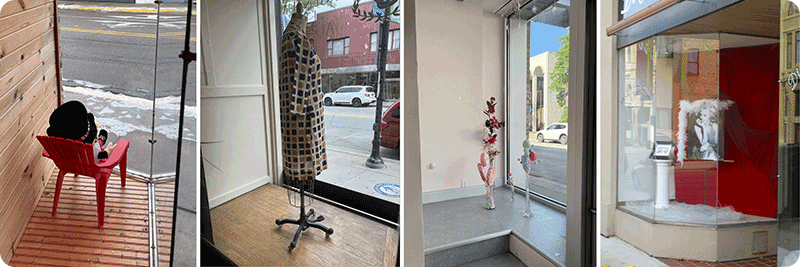
Simple is perfectly fine.
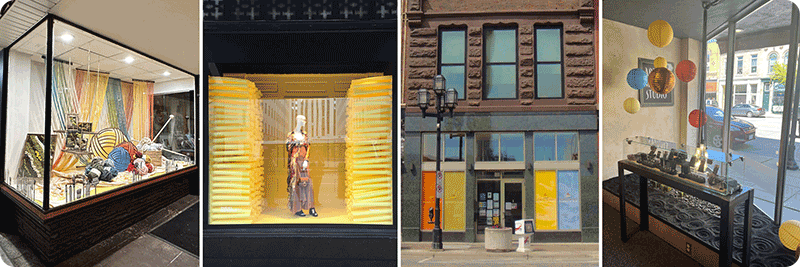
Be bright and bold.
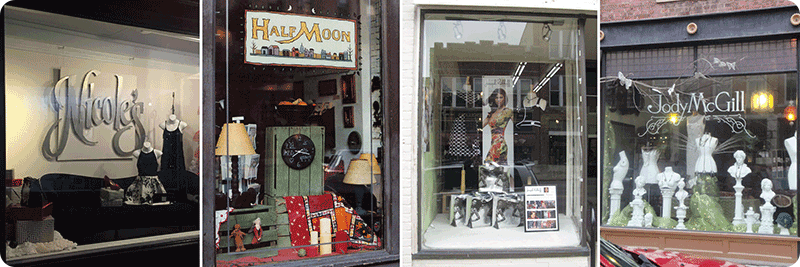
Balance height and depth; avoid flat and linear.
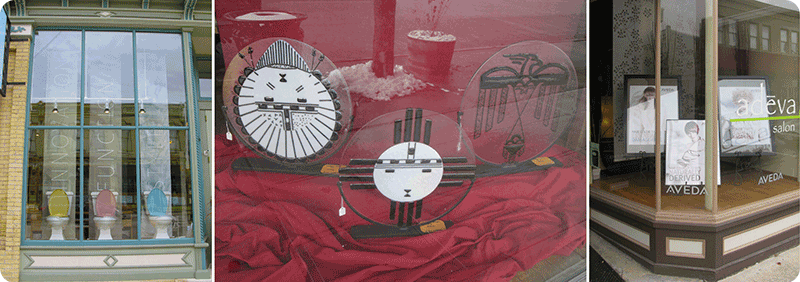
Display similar items in groups of three or five.
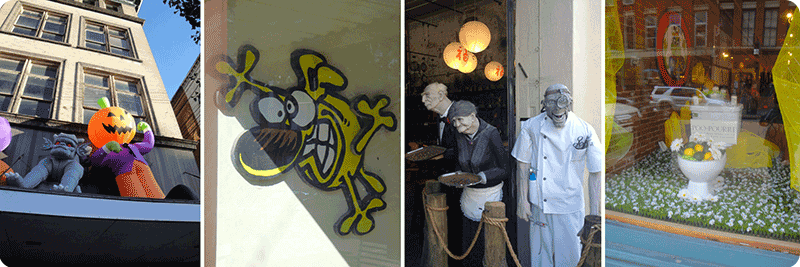
Don’t fear quirkiness. It makes people notice and smile!
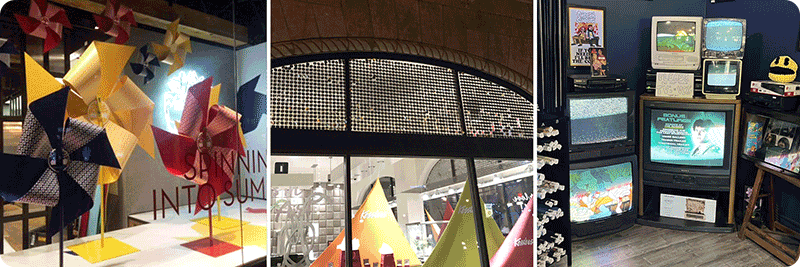
Use movement, like pinwheels, sequins, and TVs or monitors when possible.
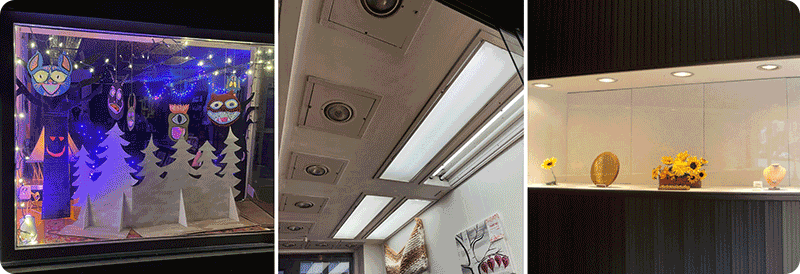
Use lighting to highlight different aspects of a display; and leave lights on into the night.
In addition to the windows, temporary displays can be extended to the outside as well. While “open” flags, outdoor merchandising, and outdoor seating can be very effective for businesses, they obviously wouldn’t serve a specific business when done in front of a vacant storefront. But they can help to make a storefront look less vacant, and an entire block look more vibrant.
Outdoor displays at vacant storefronts can be purely artistic, such as artwork and planters, or serve an actual purpose, such as benches and outdoor seating (perhaps for a neighboring business). A tattoo artist in Marshfield puts out a vintage-looking coat rack each winter that serves as a free coat exchange for anyone in need. It doesn’t serve a purpose for the business, but it’s wonderful for the community and adds another attractive display to the sidewalk.
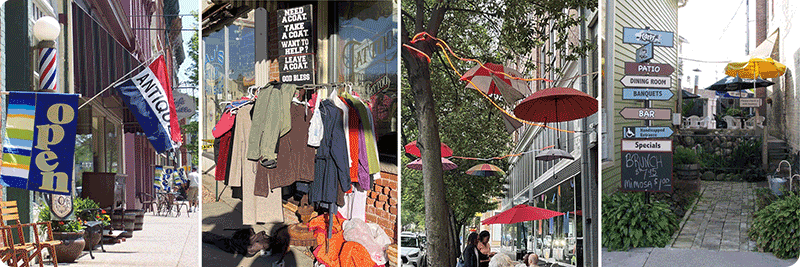
Various outdoor displays range from flags, umbrellas, and signage, to a free coat exchange for those in need.
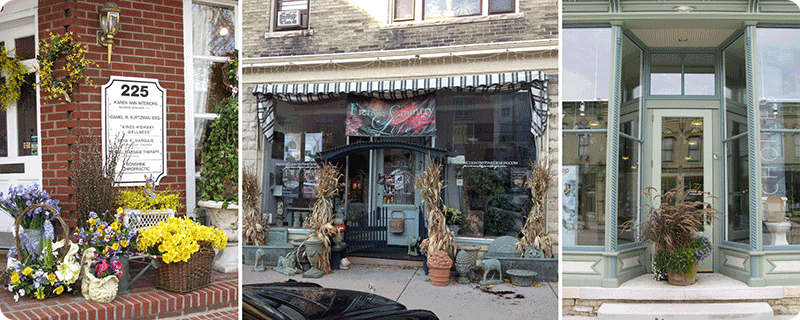
Planters are a great way to turn vacant storefronts into happy places. There must be regular maintenance though, either by the property owner or downtown stakeholders.
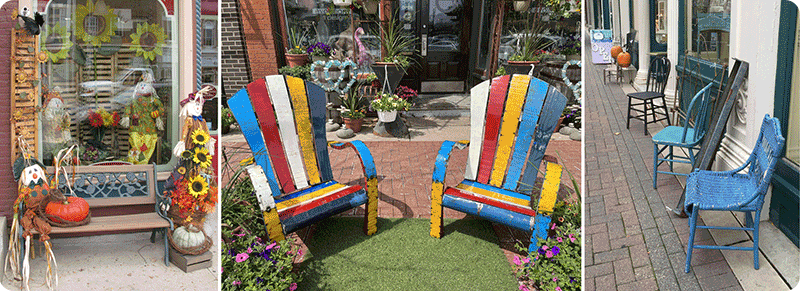
Benches and chairs can provide inviting resting spaces in front of vacant storefronts.
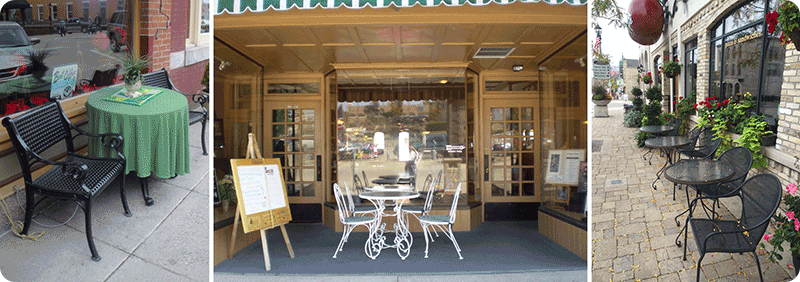
Outdoor café seating at a vacant storefront can be used by neighboring businesses, or as places for people to work remotely.
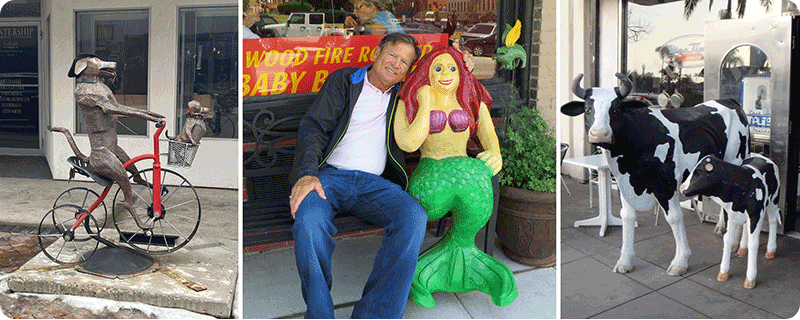
Vacant storefronts can be a perfect location for sculptures and public art, since they won’t obstruct people going in and out of the building.
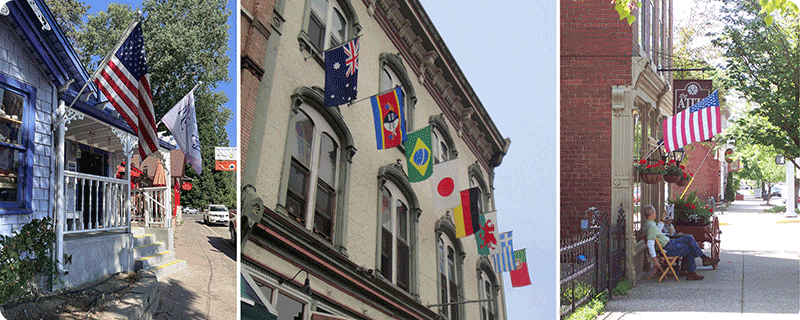
Vacant storefronts don’t need “open” flags, but other types of flags can be used to make the streetscape look more vibrant.
While a vacant building is undergoing interior renovations, it may be logical to screen the view from the outside. This can be accomplished with simple kraft paper, curtains, or blinds. But this is a great opportunity to expand upon that and use the window screening essentially as free marketing. Having signage, graphics, or even merchandise displayed just in front of the kraft paper, curtains, or blinds can make it stand out considerably. If an interior renovation is going to be in progress for a long time, using vinyl clings on the windows may be a feasible option as well.
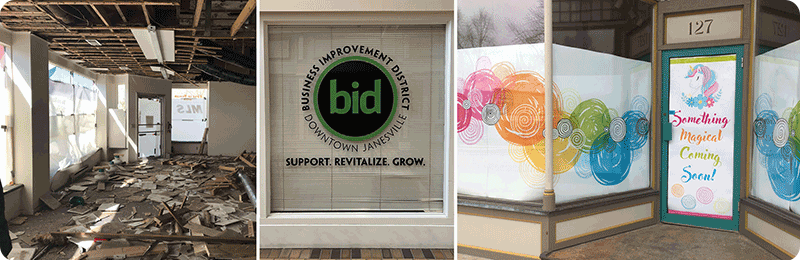
There are more creative ways to screen interior construction than just plain kraft paper.
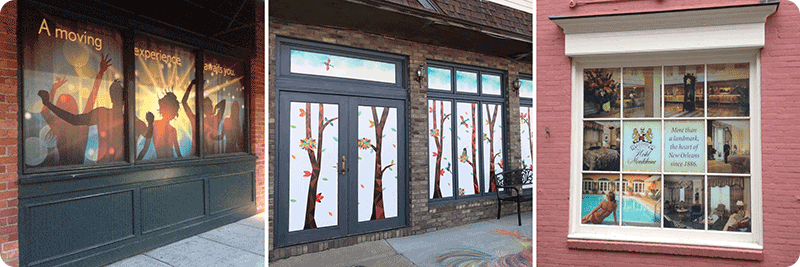
Vinyl clings may be an option for a building undergoing lengthy interior renovations.
In some cases, storefront windows were designed with a display area just inside the window and an additional set of windows or French doors behind the display area. This allows some natural light to enter the main space but still provides privacy. In other buildings, etched glass, artistic back wall panels, or freestanding privacy screens can do the same. In each case, the large storefront window is allowed to remain instead of being downsized or filled in for privacy.
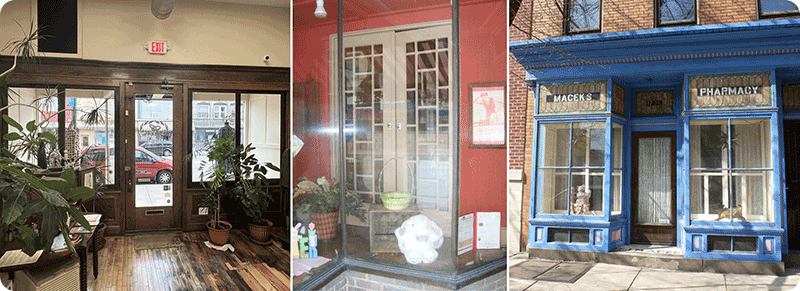
If a storefront has additional screening behind the display area, this can provide privacy and display space while allowing the full display windows to remain.
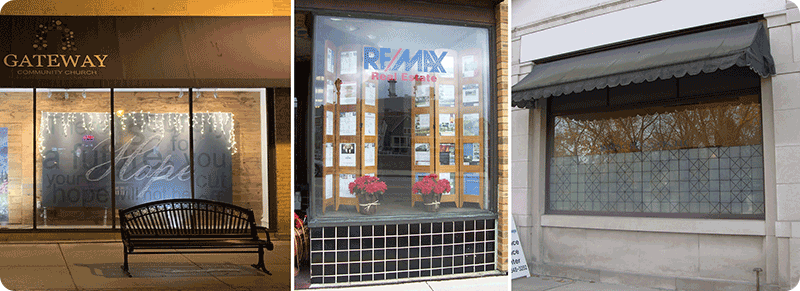
Other ways to provide screening may include large art panels, trifold dividers, or etched glass.
These are just some of the countless fun, creative, and inexpensive ways to give life to a vacant storefront. Downtown organizations can play a role in many different ways, from incentives, ideas, and hands-on assistance. If the organization, or one of its businesses or property owners, has storage space that’s not being used, perhaps it could be used as a free lending library of various display items, such as kraft paper, boxes, crates, ladders, fabric, mannequins, artwork, string, rope, etc. And neighboring business owners, especially retailers who have a great eye for window displays, could act as mentors to owners of vacant storefronts. With most issues facing communities, it takes a village to overcome them.
