
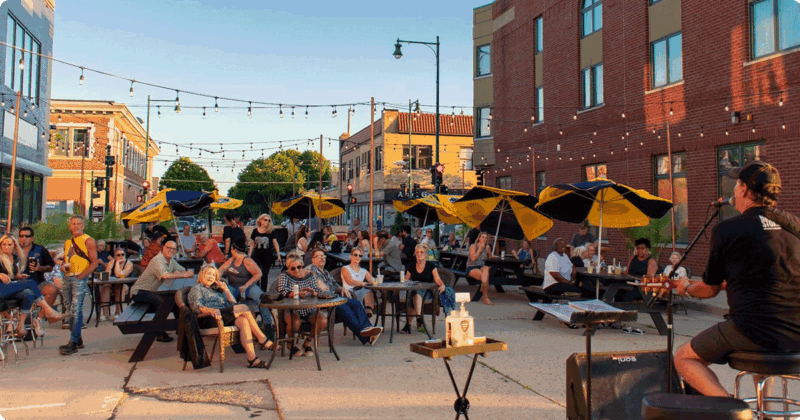
Façade improvement programs have typically been the go-to tool for communities hoping to promote downtown investment. While there’s no doubt that such programs are critical in supporting vital improvements to downtown infrastructure, today’s most successful downtowns offer a range of incentives that promote downtown experience, safety, collaboration, and coordinated marketing. To drive measurable improvements in foot traffic, business retention, and overall vibrancy, it’s time to think beyond the basics and embrace a more diversified grant toolkit. Profiled in today’s article are several high-impact grant strategies that communities are using to catalyze visible and lasting change.
Fostering quality design
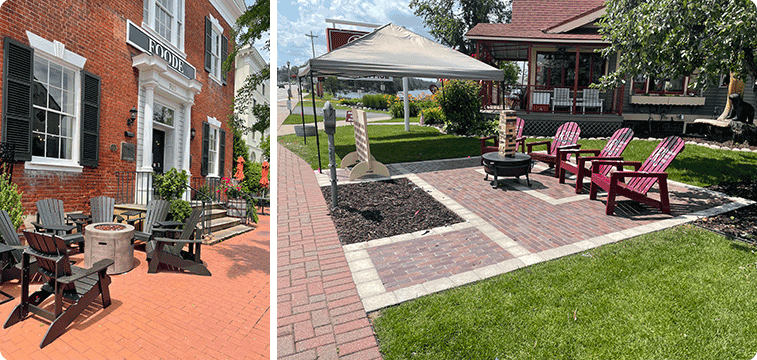
Small investments in outdoor furniture and activities can make a sidewalk feel more welcoming, even in areas without active storefronts.
While single large renovation projects make a big difference in the downtown experience, multiple small projects can have a similar effect. For every property owner ready and able to make a big investment, there are others still saving for the big project but interested in increasing their curb appeal today. These grants focus on small-scale beautification of private spaces, benefiting more of the district than single projects with a similar dollar amount and providing flexibility for businesses to test concepts with low risk to see what works best for them.
- Micro-placemaking grants: High-quality public spaces are a proven driver of foot traffic and dwell time. Placemaking grants can help fund parklets, murals, seasonal installations, lighting enhancements, outdoor seating zones, and wayfinding systems. These improvements are relatively low-cost but generate high visibility and immediate impact.
Examples:
- Destination Lake Winnebago Community Identity micro-grant
- Arlington Placemaking micro-grant
- Marshfield Welcome Back rear entrance grant
Promoting impactful investment
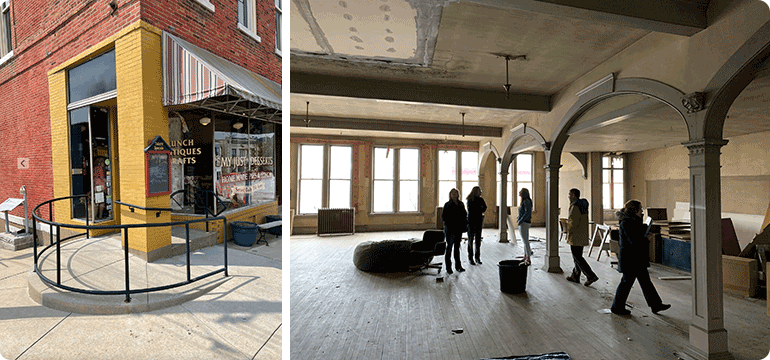
Investments in unseen infrastructure can have significant impacts on the activity happening downtown, not only inviting new groups of users but also facilitating additional types of investment.
Although a building’s façade is both structural and aesthetic, focusing only on façade improvements ignores the reality of historic building ownership. Often, less visible projects have greater potential to increase property value and utilization but are ineligible for most grant and loan programs. Encouraging property owners to explore and undertake projects that benefit not only their storefront but the economy, sustainability, and safety of the entire district can have a bigger overall impact on district vitality. Examples of such improvements include sprinklers, accessibility, security cameras, and lighting. Additionally, offering grants (or direct services) for professional design assistance—storefront merchandising, branding, interior layout, or architectural guidance—can elevate the overall quality of the district. Specifically, support for architectural and engineering support to test concepts can remove barriers to future projects.
Examples:
- Fond du Lac Building Security Grant and Security Lighting Grant
- Janesville Fire Suppression Grant
- Sheboygan Façade Restoration Studies Grant
- Downtown El Paso Residential Conversion Utility Upgrade Grant
Business engagement and activation
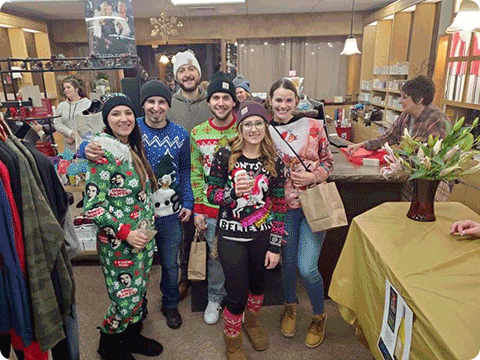
Encouraging businesses to collaborate and host events can expand the customer base downtown. Additionally, such events can target certain missing demographics, or focus on times of the day or week when activity is needed.
Downtowns thrive when they are destinations, not just individual business transactions. Grants designed specifically to support a diverse array of businesses that meet local needs will create a reason for people to come downtown regularly. These programs can cover startup costs, specialized equipment, or tenant improvements unique to targeted business needs. Programs are often focused on a goal—such as filling vacant storefronts, activating dead windows, or recruiting businesses that offer certain types of goods or operate during certain hours that fill an identified gap in the market. Similarly, downtown businesses benefit from the ability to share customer traffic. While downtown organizations often host retail events to facilitate cross traffic, it can be simpler and easier to offer incentives for businesses with similar client bases to host joint events that they can market directly to likely customers.
Examples:
- Downtown Racine Makers’ Gallery
- Experience De Pere Business Recruitment Grant
- Oshkosh Area Community Foundation Community Arts Grants
- Downtown Rochester Start-Up Event Grant
- Greensboro First Friday Micro Grant
- Janesville New Event Marketing Grant
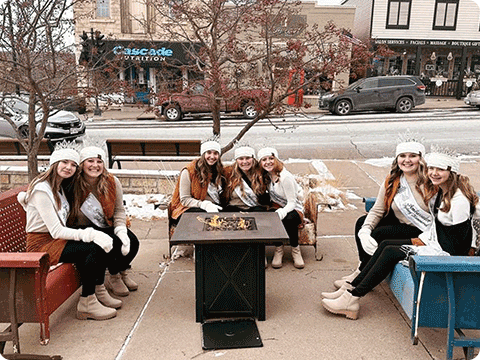
Small strategic investments invite the community to gather, linger and enjoy your district, transforming a downtown from a transaction to a destination.
Regardless of specific focus, the most effective downtown grant strategies share two common traits: They are based on local realities and they are targeted and measurable in their outcomes. Rather than investing limited grant resources on one project per year, consider offering a menu of two or three programs that address current market needs and align with strategic goals for the district, whether that is foot-traffic growth, business-mix diversification, upper-floor occupancy, storefront vacancy, or something else.
The second step in an effective grant program is the outreach that accompanies it. It is not enough to launch a grant program in a public meeting. Often, one-on-one messaging and outreach will be required to inform and educate potential applicants about the project and to match them with professionals who can help them execute their projects. Once several projects are complete, telling these stories, including the process and resulting benefits, will attract interest from other prospective investors.
Downtown revitalization is not about isolated improvements—it’s about creating an integrated, experience-driven environment. By expanding incentives beyond façades to address deeper issues or encourage desired behavior, downtowns can unlock new energy, attract diverse users, and ultimately create downtowns that are not just functional but truly magnetic.
Related Posts