
Bordered by two Great Lakes and the mighty Mississippi River, Wisconsin is home to more than 15,000 inland lakes and crisscrossed by 84,000 miles of rivers and streams. It is nearly half covered by forests, dotted by rocky outcroppings, and alive with abundant wildlife. Wisconsin’s spectacular natural assets just beckon us to come out and play.
Wisconsin’s wealth of outdoor recreation amenities is an important asset that attracts tourism, talent, and business development. Increasingly, outdoor recreation is becoming a multi-tool in the economic development toolbox, providing solutions to diversify and grow local economies, fostering community pride in place, offering healthy transportation and recreation alternatives, improving public health, and generally enhancing the quality of life for residents.
Generating support and securing capital to develop a trail, boat launch, or other recreational facility can be difficult, though. Outdoor recreation has often been thought of as “just for fun,” rather than a must-have or a priority. That sentiment, however, is slowly shifting as data demonstrating the significance of the outdoor industry and the impacts of outdoor recreation infrastructure in communities is analyzed.
While communities can see and feel the benefits of outdoor recreation, it can be challenging and costly to quantify the local impacts. National and state-level data is available through the Outdoor Recreation Satellite Account (ORSA) at the U.S. Department of Commerce’s Bureau of Economic Analysis. That data reinforces anecdotal stories heard by local leaders and underscores the significance of Wisconsin’s $11.2 billion outdoor recreation industry, but doesn’t provide actionable local data.
A program to analyze local impacts
To help communities advance their outdoor recreation projects and economic development goals, the Wisconsin Office of Outdoor Recreation created the Do-It-Yourself Economic Impact Program , developed in partnership with The Harbinger Consultancy . The program makes conducting an economic analysis more accessible by removing barriers and providing the knowledge, tools, and support necessary to conduct a study and produce a report.
The office’s innovative three-part program lets individuals choose the pace and depth at which to explore the process of collecting and analyzing visitor data to calculate economic impact.
- A written guide, A Do-It-Yourself Guide: Conducting and Using Visitor and Recreational User Research , is available as a free, downloadable resource, providing step-by-step instructions and additional resources.
- A workshop covers the fundamentals of the process and how to use the DIY guide effectively, and provides opportunities for attendees to discuss real-life scenarios. The workshop takes place in two 90-minute virtual sessions. The 2026 workshop will take place on Feb. 10 and Feb. 17. Registration is open now.
- A nine-month practicum provides one-on-one coaching and technical assistance to teams who attend the workshop, complete an application, and are accepted. Application information is provided to workshop participants at the conclusion of the workshop.
Since 2024, when the office first launched the Do-It-Yourself Economic Impact Program, 10 teams have completed the practicum, uncovering more than $75 million in local economic activity generated by outdoor recreation. The 2025 teams just released their findings, and each report tells a local story of how outdoor recreation contributes to the economic vitality and overall vibrancy of its community.
Three Eagle Trail – Three Lakes and Eagle River
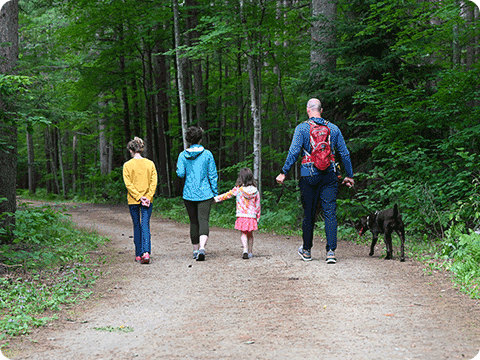
Three Eagle Trail
The small rural communities of Three Lakes and Eagle River are popular Northwoods destinations connected by the world’s largest chain of lakes, the Chequamegon-Nicolet National Forest, and the 12.7-mile Three Eagle Trail. The region has long drawn visitors attracted by its outdoor recreation opportunities.
In the summer of 2025, the Three Eagle Trail Foundation, Three Lakes Visitors Bureau, and the Great Headwaters Trail Foundation collaborated, sharing organizational capacity and resources, to study the impact of the Three Eagle Trail on the two communities. Using automatic trail counters accompanied by an online survey for users, the group collected data necessary to calculate the economic impact of the trail, determining that users of the trail contributed an impressive $2 million to the local economies of Three Lakes and Eagle River during the study period.
While the final economic impact figure was the goal, the team gained countless insights about the trail users and visitors to the two communities. “The report reinforced what we’ve long understood: The Three Eagle Trail draws people to our communities and supports both economic activity and quality of life,” said Jacqui Sharpe, executive director of the Three Lakes Area Visitors Bureau. “These insights give us a strong foundation to strengthen partnerships, improve trail infrastructure, and thoughtfully expand biking and recreation opportunities to continue to benefit our communities.”
Read more about Three Eagle Trail .
Heart of Vilas Trail System – Boulder Junction, Manitowish Waters, Mercer, Sayner, and St. Germain
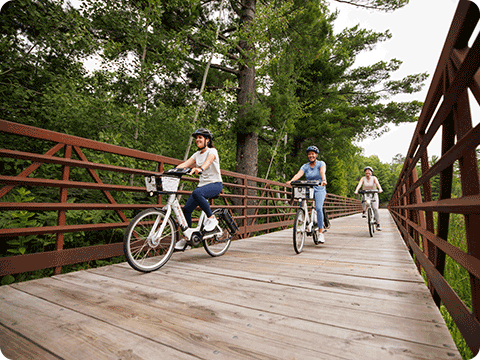
Heart of Vilas Trail System
Known for its scenic views through the Northern Highland-American Legion State Forest, the Heart of Vilas Bike Trail System connects five communities with one common goal: to enhance the region’s plethora of outdoor recreation opportunities and grow the area as a cycling destination.
“The Heart of Vilas Bike Trail System plays a large role in shaping the tourism economy of the communities it intersects, but the actual impact was unknown,” explained Mary Jones, executive director of the Boulder Junction Chamber of Commerce. “Completing this economic impact study with the support of the Office of Outdoor Recreation and The Harbinger Consultancy has given us the ability to put a number to the value of this multicommunity asset.”
From May to September 2025, data collected from trail counters allowed the team to estimate more than 160,000 people used the trail across the system during the summer 2025 season. Additionally, surveys collected from those users helped the team calculate that an estimated $25.7 million in economic activity was generated, 42 jobs supported and $1.7 million in state and local tax revenue generated to benefit the five connected communities.
Read more about Heart of Vilas Trail System .
Oconto County
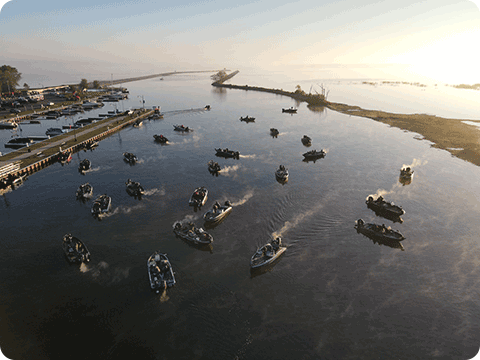
Breakwater Park and Harbor, Oconto
Oconto County in Northeast Wisconsin offers a rare combination of water access and trail networks that attract outdoor enthusiasts across all seasons. With 379 lakes, 1,000-plus miles of streams, more than 100 miles of Green Bay shoreline, and more than 500 miles of ATV/UTV trails connecting communities, anglers, trail riders, paddlers, and nature seekers find their ideal outdoor playground in Oconto County.
To better understand the contribution of outdoor recreation to local economies, the Tourism & Economic Development Corp. for the Oconto Region (TEDCOR) conducted visitor research in 2025. The findings revealed important patterns about the area’s outdoor recreation economy, suggesting that the county’s greatest asset may not be first-time visitors discovering the region, but rather, the deeply loyal base of repeat guests. It also showed that anglers and trail riders spend the most, with the average angler group spending more than $2,000 per trip.
Local proprietors note their businesses rely on the influx of out-of-town visitors drawn to the area for the outdoor experiences.
“In our small city of Oconto, the Bay of Green Bay is our bread and butter. We can’t make it on locals alone—we need those repeat visitors coming back season after season. These aren’t just tourists passing through—they’re people who care about this place as much as we do,” said Paul Lukas, owner of North Shore Bait Company in Oconto.
The study provided insights that can inform strategic investment in amenities and infrastructure serving the established visitor community, while also attracting new visitors. Kelly Schwartz of TEDCOR explained how they plan to use the findings and build on their learnings. “We are thrilled with the clear evidence that outdoor recreation is a massive economic engine for Oconto County,” Schwartz said. “Committing to expanded research in 2026, we will use these insights to support local businesses, enhance visitor experiences, and leverage outdoor recreation as a cornerstone of economic development, all while maintaining the authentic Northwoods character that built this powerful visitor loyalty.”
Download information about Oconto County .
Olbrich Botanical Gardens – Dane County
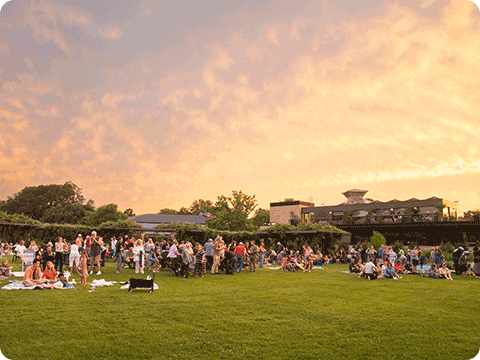
Olbrich Botanical Gardens, Madison
Competition for funding and resources is often a concern among small and large communities alike. Located in Madison, Olbrich Botanical Gardens is one of nearly 300 facilities in the city’s parks department. Leading up to a master planning process for the garden’s future, the team at Olbrich had a need to understand its value as a community resource and as a unique destination that attracts nearly 400,000 visitors annually to explore the outdoor gardens, tour the Bolz Conservatory, and attend events and educational programs.
A survey conducted of visitors during the summer of 2025 revealed that nearly half of all visitors identified the gardens as their primary reason for visiting the area, underscoring its role as a tourist attraction. The survey also revealed 45% of visitors stayed one or more nights in the area. In total, visitors to Olbrich generated an estimated $20.1 million in economic activity for Dane County.
“This economic significance project provided invaluable insights into Olbrich’s role within our community,” said Tanya Zastrow, executive director of Olbrich Botanical Gardens. “This data comes at a pivotal moment, as it will directly inform our strategic goals during our comprehensive master planning process in 2026.”
Read about the Olbrich Botanical Gardens .
Peninsula State Park mountain bike trails – Door County
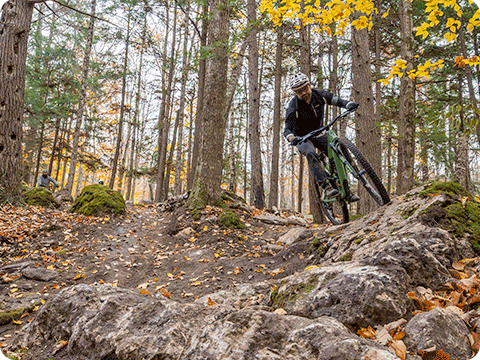
Peninsula State Park mountain bike trails. Photo courtesy of Dan Eggert Photography.
As part of the process to develop the 2018 Northern Lake Michigan Coastal Master Plan, which includes Peninsula State Park, the results of a public survey indicated this region had the highest need for mountain bike trails. Heeding the need, a recommendation for a mountain bike trail network was included in the plan, and the first phase of the project—7.5 miles of purpose-built mountain bike trails —was recently completed. A second phase, which will bring the total mileage to 20, is expected to open in 2026.
The Friends of Peninsula State Park partnered with park administration and Destination Door County to begin collecting data from riders of the brand-new trails to understand their demographics, usage patterns and spending behaviors. The first season of data was collected from May to October 2025 using trail counters and a rider survey, and compared against geolocation data from Destination Door County’s provider, Azira.
Preliminary data revealed that the new mountain bike trails drew not only locals–more than half of the riders were from outside the area. Nonlocal visitor spending averaged $487 per trip per person, generating $1.3 million for Door County businesses from the summer 2025 riding season.
This baseline data provides an early indicator of the return on investment in creating the trail system. “Funded in part by Destination Door County’s Community Investment Fund, it’s wonderful to see these new mountain bike trails already attracting out-of-town riders and generating strong economic benefits in just the first season—supporting local businesses and the Door County visitor economy,” said Julie Gilbert, president and CEO of Destination Door County.
Equipped with the tools and knowledge of the process, the team plans to continue data collection to monitor visitation and compare trends over time, providing valuable insights to inform programming, promotion, outreach, and management actions.
Download the details about Peninsula State Park Mountain Bike Trails .
Teaching communities ‘how to fish’
“Give a man a fish, and you feed him for a day. Teach a man to fish, and you feed him for a lifetime.”
The Do-It-Yourself Economic Impact Program is designed to make the process of conducting an economic impact analysis approachable, digestible, achievable, and repeatable. Practicum participants have the expertise of a consultant, the support of team members and other participants, and additional assistance provided by staff from the Office of Outdoor Recreation. The goal is to coach participants successfully through the process the first time, so they gain a deeper understanding of the information and develop a process that can be used again and again.
Tim White, executive director of Visit Wausau and a past participant in the Do-It-Yourself Economic Impact Program, explained, “Participating in the DIY program was not only helpful in showing the value of our outdoor assets, but it was great to work with other organizations who were doing the same thing. The networking, sharing of ideas and strategies, as well as frustrations, provided a connecting thread that we are all in this together, on the same team, showcasing how amazing Wisconsin really is.”
As more communities are equipped with the knowledge and tools to understand the impacts of their outdoor recreation assets, the story of their value to a community becomes a compelling point when seeking support for future development, maintenance, and related activities that will undoubtedly provide economic benefits.
